When Life Feels Heavy—Even If You Can’t Quite Explain Why
Many adults come to therapy not because one thing is “wrong,” but because life has slowly become harder to carry. You might be:
- Constantly stressed or emotionally exhausted
- Living with anxiety, low mood, or burnout that doesn’t seem to lift
- Functioning well on the outside while feeling overwhelmed inside
- Struggling in relationships or feeling disconnected from yourself
- Wondering why things that used to feel manageable no longer do
Often, people tell us, “I don’t know if this counts as trauma—I’m just tired of feeling this way.”
At Eckert Psychology & Education Centre, we look beyond symptoms to understand what may be contributing to how you feel.
That means considering your emotions and thoughts, but also your brain, nervous system, body, relationships, family and work systems, and the demands of your life.
Because sometimes counselling is exactly what you need. And sometimes counselling is only part of the answer.
More Than a Counselling Practice
If you’re comparing counselling options in Calgary, you may notice that many practices offer similar things: experienced therapists, evidence-based approaches, compassionate care, and a safe place to talk.
Those things matter. But sometimes counselling is only one part of what helps a person move forward.
At Eckert Psychology & Education Centre, we have spent 25 years expanding how we understand and support human well-being. Today, our psychologists can look beyond counselling alone and consider the connections between your psychological health, brain, nervous system, body, relationships, and life circumstances.
That means your care can begin with counselling without being limited to counselling.
Depending on what you need—and what matters to you—your care can include:
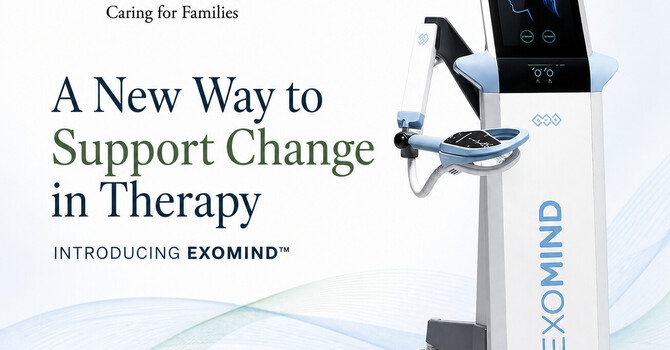
- ExoMind rTMS — non-invasive brain stimulation that can be considered for appropriate clients experienceing concerns such as depresion and anxiety, or when brain health may be an important part of the treatment conversation.
- Emsella therapy — non-invasive pelvic floor therapy for concerns that can affect bladder control, body confidence, sexual well-being, and participation in everyday life.
- Psychological assessment and specialized learning supports — when understanding how you think, learn, regulate, or function would help clarify what comes next.
- Individual, couples, and family counselling — because sometimes meaningful individual change also requires understanding the relationships and systems around you.
- Faith-based Christian counselling, when requested — for clients who want their Christian faith thoughtfully integrated into psychological care. Faith integration is always client-led and is never assumed or introduced unless you want it to be part of your counselling.
As your needs change, your care can change with you—without automatically having to leave the practice and start your story over somewhere else.
You may need counselling and nothing more. You may discover that another kind of support could help. Or your needs may change over time.
You don’t need to figure that out before you call us.
Our job is to understand what is getting in the way of your well-being, explain the options available to you, and help you make an informed choice about what belongs in your care.
Therapy With a Clear Map: The Eckert Centre Well-Being Model™
Good therapy needs more than a conversation. It needs a shared understanding of what is keeping you stuck, where change is needed, and what you are working toward.
That is why our counselling is guided by the Eckert Centre Well-Being Model™—our framework for understanding the whole person and keeping therapy focused on the areas of life that matter most.
The model looks at four interconnected “wings” of well-being:
- Intrapersonal: your brain and nervous system health, emotions, thoughts, identity, and inner experience
- Interpersonal: your relationships, attachment patterns, communication, and boundaries
- Family and Work Ecosystems: the roles, responsibilities, stressors, and relational patterns within the systems around you
- Meaning-Making: your values, purpose, direction, and the “why” behind your choices
Why does this matter?
Because the concern that brings you to counselling is not always the whole story. Anxiety may be connected to an overloaded family or work system. Burnout may involve boundaries, brain health, identity, or a loss of meaning. Relationship difficulties may be shaped by attachment patterns that have been repeated for years.
The Eckert Centre Well-Being Model™ gives you and your therapist a map for understanding these connections, deciding where to begin, and keeping the work moving toward meaningful change.
You should know what you are working on in therapy—and why.
Trauma-Informed and Neurodiversity-Affirming—Without Assumptions
You do not need to decide whether your experiences “count” as trauma before coming to counselling. And we will not assume that every difficulty you are experiencing is caused by trauma.
Being trauma-informed and neurodiversity-affirming changes how we approach therapy—not simply the language we use to describe it.
It means we consider:
- What has happened to you and how past experiences may be influencing the present
- How your nervous system responds to stress, including patterns of overwhelm, shutdown, hypervigilance, or disconnection
- How your brain processes the world, including differences in attention, sensory processing, executive functioning, communication, and emotional regulation
- What therapy asks of you, adapting the pace, strategies, and expectations rather than assuming one approach works for everyone
We want to understand the difference between something you need help changing and something about you that needs to be understood and supported differently.
That distinction matters.
It helps us build therapy around who you actually are—not around assumptions about who you should be.
The Power of 8™: Start With a Plan
One of the hardest things about beginning counselling is not knowing what you are signing up for.
How often will I come? How long will this take? How will I know if it is helping?
At Eckert Centre, we don't believe your first answer needs to be “We'll see.”
Our proprietary Power of 8™ gives the beginning of therapy a clear rhythm: eight weekly sessions, followed by a purposeful review of your progress and what should happen next.
During those first eight sessions, you and your therapist have time to:
- Build safety, trust, and a clear understanding of what brings you to counselling
- Use the Eckert Centre Well-Being Model™ to identify where change may be needed
- Move from understanding what is happening to actively working toward change
- Notice what is changing, what remains difficult, and what you are learning about yourself
- Review your progress and make an informed decision about what comes next
Eight sessions are not a promise that everything will be resolved. They are a meaningful place to begin—and a deliberate point to stop, look at what is changing, and decide what you need next.
What Happens After Eight Sessions?
There is no automatic next block of therapy.
Some clients feel they have accomplished what they came for and finish counselling, knowing they can return when life changes.
Others identify deeper or different goals and choose another focused period of work.
Some transition to less frequent appointments and keep their psychologist as part of their long-term health team—checking in monthly, quarterly, or during important life transitions.
And sometimes the review shows us that more counselling is not the only option worth considering. Depending on your needs, your psychologist may discuss another service, collaborate with another professional involved in your care, or help you think differently about the next step.
We have clients who have returned to Eckert Centre across many seasons of their lives. The value is not in staying in therapy indefinitely. It is in having a trusted psychologist who knows your story—and knowing when it makes sense to come back.
Start with eight. See what changes. Then decide what comes next.
Start With a Counselling Consultation Call
You don't need to know exactly what kind of therapy you need—or which psychologist would be the best fit—before contacting us.
Start with a counselling consultation call.
Tell us a little about what is bringing you to counselling, what you hope will change, and what matters to you in a therapist. We'll answer your questions, explain how we work, and help you identify the clinician and starting point that make the most sense for you.
And because Eckert Centre offers more than counselling, if another service or type of support may be worth exploring, we can help you understand those options too.
Counselling is available:
- In person at our Calgary North location
- Online throughout Alberta
- During daytime and evening hours, with limited weekend availability
- With same-day insurance receipts provided
You don't need to have the whole plan. You just need a place to begin.
Book your counselling consultation call and let us help you determine the next step.
Frequently Asked Questions
You do not need to wait until life feels unmanageable to begin counselling. Adults come to Eckert Centre for many reasons, including anxiety, depression, burnout, relationship difficulties, trauma, major life transitions, neurodivergence, or simply recognizing that something in their life is no longer working as well as they would like.
A counselling consultation call can help you talk through what is happening and determine which clinician and type of support may be the best place to begin.
There is no single number of counselling sessions that is right for everyone. At Eckert Centre, however, we believe it helps to begin with a plan rather than an open-ended commitment.
Our Power of 8™ approach starts with eight weekly counselling sessions, followed by a purposeful review of your progress. At that point, you and your therapist consider what has changed, what still needs attention, and what makes sense next.
Some clients finish counselling after their initial work. Others continue with another focused period of therapy, move to less frequent appointments, or return later when a new challenge arises.
The Power of 8™ is Eckert Centre's structured rhythm for beginning counselling: eight weekly sessions followed by a review of progress and next steps.
The eight sessions give you and your therapist enough time to build a therapeutic relationship, understand what is bringing you to counselling, begin meaningful therapeutic work, and evaluate what is changing.
It is not a promise that every concern will be resolved in eight sessions. It creates a clear starting point and a deliberate opportunity to decide what should happen next.
Eckert Centre is more than a traditional counselling practice. Our psychologists consider psychological health within the broader context of your brain and nervous system health, relationships, family and work systems, body, and sense of meaning and purpose.
Counselling is guided by our Eckert Centre Well-Being Model™ and begins with our structured Power of 8™ approach.
We also offer psychological assessment, ExoMind rTMS, Emsella therapy, specialized learning supports, couples and family counselling, and optional faith-based Christian counselling. This means that if your needs change, your care can change with you without automatically requiring you to leave the practice and start over somewhere else.
Trauma-informed counselling recognizes that past experiences can influence how your brain, nervous system, emotions, relationships, and body respond to what is happening today.
It does not mean that your therapist will assume you have experienced trauma or interpret every difficulty through a trauma lens.
At Eckert Centre, being trauma-informed affects how we approach the therapeutic relationship, understand patterns of stress and protection, pace therapy, and help you work toward change without unnecessarily overwhelming your system.
Yes. Eckert Centre provides neurodiversity-affirming counselling for adults, including adults with ADHD, autism, learning differences, executive-functioning challenges, or other differences in how they process and respond to the world.
A neurodiversity-affirming approach does not assume that every difference needs to be changed. We work to understand which difficulties are creating genuine barriers in your life and which aspects of who you are may instead need greater understanding, accommodation, or support.
You do not need a formal diagnosis to discuss neurodivergence as part of your counselling.
Yes. For appropriate clients, counselling can be combined with ExoMind rTMS, a non-invasive form of brain stimulation available at Eckert Centre.
Counselling and rTMS work in different ways. Psychological therapy can help you understand patterns, develop skills, process experiences, strengthen relationships, and make meaningful changes in your life. rTMS provides another way of working with brain function and may be considered when brain health is an important part of the treatment conversation.
ExoMind is not automatically recommended because someone comes to Eckert Centre for counselling. Whether it is appropriate depends on your concerns, goals, health history, preferences, and clinical assessment.
No. Eckert Centre provides evidence-based psychological care to clients with many different beliefs and worldviews.
Faith-based Christian counselling is available only for clients who request it. If your Christian faith is important to how you understand yourself, your relationships, your difficulties, or the decisions you are making, it can be thoughtfully integrated into your counselling.
If you do not want faith incorporated into therapy, it will not be assumed or introduced into your care.
Yes. Eckert Centre offers secure online counselling for clients located throughout Alberta, as well as in-person adult counselling at our Calgary North location.
Online counselling can be a convenient option for adults who live outside Calgary, travel within Alberta, have demanding work or family schedules, or simply prefer attending therapy from home.
Your consultation call can help determine whether in-person or online counselling is the better fit for your needs and preferences.
The right therapist is not simply the person with the right professional title. Their areas of expertise, therapeutic approach, experience, personality, availability, and understanding of what you want from counselling can all matter.
That is why we recommend beginning with a counselling consultation call rather than trying to choose from a list of clinician biographies on your own.
Tell us what is bringing you to counselling, what you hope will change, and what matters to you in a therapist. We can then help you identify the Eckert Centre clinician and starting point that make the most sense for you.