When Your Child Is Struggling, It Affects the Whole Family
If you’re here, something in your child’s world doesn’t feel quite right.
- Maybe emotions feel bigger than your child can manage.
- Maybe anxiety, anger, shutdowns, or meltdowns are showing up more often.
- Maybe school has become a daily battle—or your once-easy child feels withdrawn, irritable, or overwhelmed.
- And underneath it all, you may be asking yourself:
Is this a phase… or a sign we need support?
Am I missing something?
How do I help my child without making things worse?
At Eckert Centre, you don’t have to figure this out on your own.
Our child counselling services support both your child and you, with care that is thoughtful, structured, and deeply attuned to how children actually grow and heal.
To learn more about how counselling at Eckert Centre works across ages and needs, see our broader Counselling services overview.
A Different Approach to Child Counselling
Many parents come to us after trying other options—school supports, parenting strategies, or short-term therapy that didn’t quite stick.
What makes Eckert Centre different is how we understand children and how we structure care.
We See the Whole Child—Not Just the Symptoms
Children don’t struggle in isolation. Emotional regulation, behaviour, learning, relationships, and family stress all interact.
Our work is guided by the Eckert Centre Well-Being Model™, which looks at:
-
Your child’s inner world (emotions, nervous system, self-understanding)
-
Relationships (attachment, peer connections, family dynamics)
-
The family ecosystem (parent stress, routines, school pressures)
-
Meaning and identity as children grow and make sense of their experiences
This allows us to address root causes—not just surface behaviours.
Therapy Designed for How Children Communicate
Children don’t process through conversation alone. They process through play, movement, imagination, and relationship.

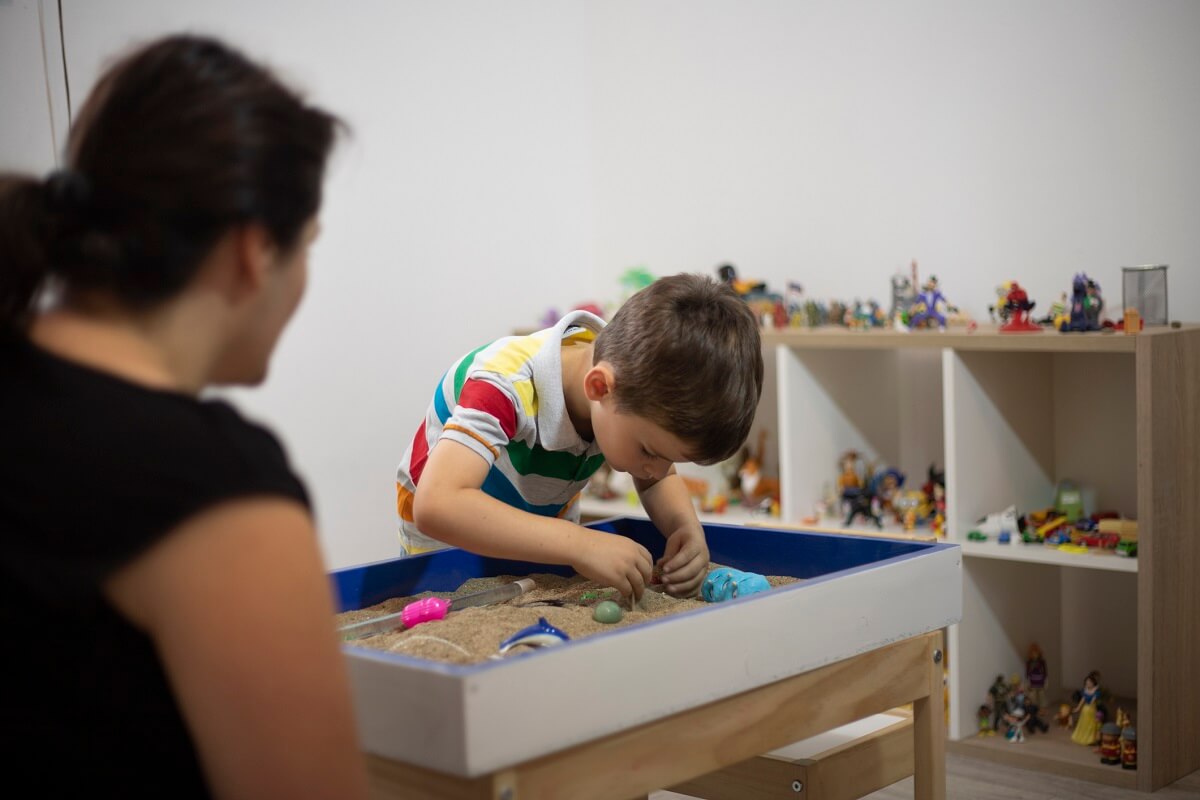
Through play therapy, expressive arts, and somatic (body-based) approaches, children can safely explore what they don’t yet have words for—while feeling understood and supported.
Parents Are Partners—Not Bystanders
We actively involve caregivers in the therapeutic process. You’ll gain insight into what’s really happening beneath the behaviour and receive guidance you can use at home—without blame or judgment.
Integrated Care Under One Roof
If your child needs additional support—such as assessment or learning services—our in-house team collaborates closely. This integrated approach prevents gaps in care and reduces the burden on families to coordinate multiple providers at different locations.
A Clear Path Forward: The Power of 8™
You're Not Alone. Your Child Deserves The Right Support and So Do You
One of the most stressful parts of starting therapy is uncertainty:
How long will this take? Is it working? When do we reassess?
Our Power of 8™ model brings structure and clarity to the therapy process.
Here’s how it works:
-
Weekly sessions build safety, trust, and momentum
-
Around sessions 4–5, many children reach a “stuck” or testing point—this is expected and supported
-
Session 8 becomes a natural pause point to reflect:
-
What’s changed?
-
What still needs support?
-
Do we continue weekly, shift focus, or space sessions out?
-
This rhythm keeps therapy purposeful, transparent, and responsive, rather than open-ended or unclear.
What Happens in Child and Play Therapy?
Play therapy is not “just play.” It is a developmentally appropriate way for children to work through complex emotional experiences.
In sessions, your child may:
-
Create sand worlds or stories that reflect real-life challenges
-
Use art, movement, or imaginative play to express big feelings
-
Practice boundaries, coping skills, and social understanding through role-play
-
Build regulation and confidence through sensory and co-regulating experiences
Each session is tailored to your child’s age, temperament, developmental stage, and goals.
Common Reasons Families Seek Child Counselling
We support children and families navigating:
-
Anxiety, worry, anger, or emotional overwhelm
-
Trauma, grief, or major life transitions
-
ADHD, autism, sensory processing, or regulation challenges
-
School stress, avoidance, or learning-related strain
-
Parent-child conflict, power struggles, or parenting burnout
-
Family changes, sibling conflict, or relational stress
Sometimes parents come with a clear concern.
Other times, they simply know something feels off.
Both are valid starting points.
Therapy That Evolves as Your Child Grows
Children grow, families change, and needs evolve over time.
Some families come to us for focused support during a specific season and then step back once things feel more stable. Others return during new developmental stages, school transitions, or major life changes.
At Eckert Centre, our work is guided by the Eckert Centre Well-Being Model™, which means we understand your child within the full context of their emotional world, relationships, family system, and developing sense of self. This whole-family lens allows therapy to evolve naturally as your child grows—without starting over or losing continuity of care.
We support many families raising neurodiverse children or children with more complex needs. For these families, challenges are rarely isolated or time-limited. Having a consistent home base for care, where your child is known and your family’s history is understood, often brings the greatest stability and long-term progress.
As children grow, therapy may shift in focus—from early regulation and attachment, to navigating school and peer relationships, to identity, independence, and resilience in later years. While the focus changes, the foundation remains the same.
For Alberta families accessing FSCD funding, we are experienced in working within these funding structures and supporting thoughtful, lifespan-oriented use of psychological care resources.
Our goal is not dependence on therapy, but confidence, resilience, and continuity of care—so when new challenges arise, your family already has a place where you are understood and supported.
Co-ordinated Care Under One Roof
For some children, counselling is one part of a broader picture.
When questions about learning, attention, mental health, or development arise, our counselling, assessment, and learning/coaching support teams collaborate closely—so families don’t have to coordinate care across disconnected providers.
What is Theraplay
Practical Details Parents Care About
-
Insurance coverage: Services are covered by most extended health benefit plans
-
Receipts: Same-day emailed receipts for easy reimbursement
-
Access: In-person child counselling in Calgary, with families also coming from Airdrie, Cochrane, Okotokos, and surrounding areas
-
Virtual care: Available across Alberta for appropriate referral concerns
Take the Next Step for Your Child—and for You
Early support can change a child’s developmental path—and ease the weight parents often carry quietly.
If you’re wondering whether counselling could help your child, we invite you to take the next step.
Book a consultation call or schedule a first session today.
We’re here to walk alongside your family—with clarity, compassion, and care that truly fits.
Frequently Asked Questions
Many parents wonder whether what they're seeing is a typical developmental phase or a sign that additional support may be helpful.
Child counselling may be beneficial if your child is:
- Experiencing frequent anxiety, worry, or fears
- Having difficulty managing emotions such as anger, frustration, or sadness
- Showing increased meltdowns, shutdowns, or emotional outbursts
- Struggling at school academically, socially, or emotionally
- Becoming withdrawn, irritable, or less engaged than usual
- Adjusting to a significant life change, loss, or transition
- Having ongoing difficulties with behaviour, relationships, or self-esteem
You do not need to wait until problems become severe before seeking support. Early intervention can often prevent challenges from becoming more complex over time.
Play therapy is a developmentally appropriate form of counselling that allows children to express thoughts, feelings, and experiences through play.
Children often communicate what they cannot yet put into words. Through carefully selected therapeutic activities, play becomes a way for children to process emotions, work through challenges, and develop healthier coping skills.
Play therapy may include:
- Imaginative play
- Storytelling
- Art and creative activities
- Sand tray therapy
- Movement-based activities
- Role-playing and social skill development
While it may look like play from the outside, each activity is guided by therapeutic goals and clinical expertise.
Every session is tailored to the child's age, personality, developmental stage, and goals.
Depending on your child's needs, sessions may involve:
- Building emotional awareness and regulation skills
- Exploring feelings through play and creative activities
- Practicing problem-solving and coping strategies
- Strengthening confidence and self-understanding
- Developing social and relationship skills
- Processing difficult experiences or transitions
Therapists create a safe environment where children can explore challenges at a pace that feels manageable.
Yes.
At Eckert Centre, parents and caregivers are viewed as important partners in the therapeutic process.
While your child's privacy and therapeutic relationship are respected, therapists provide guidance, education, and feedback to help you better understand what your child may be experiencing and how to support them at home.
The level of parent involvement varies based on the child's age, developmental needs, and treatment goals.
This is very common.
Many children feel uncertain about something new, especially if they do not fully understand what counselling involves.
Our therapists work carefully to build trust, create emotional safety, and meet children where they are. Sessions are designed to feel engaging, supportive, and developmentally appropriate rather than clinical or intimidating.
Children often become more comfortable once they begin developing a relationship with their therapist.
Yes.
Supporting a struggling child can be emotionally exhausting, confusing, and overwhelming.
Part of our role is helping parents better understand their child's needs while providing practical strategies that can be used at home. Parents often report that gaining clarity about what is happening beneath the behaviour helps them feel more confident and less alone.
Yes.
One advantage of Eckert Centre's multidisciplinary model is that counselling, assessment, and learning support services can work together when appropriate.
This integrated approach helps reduce gaps in care and makes it easier for families to access coordinated support without navigating multiple providers independently
Yes.
Our team has experience supporting families who access services through Alberta's Family Support for Children with Disabilities (FSCD) program.
We understand the importance of creating thoughtful, long-term support plans that maximize available resources while adapting to your child's changing needs over time.
The first step is booking a consultation call or scheduling an initial appointment.
This allows you to:
-
Discuss your concerns
-
Ask questions about the counselling process
-
Learn about our approach
-
Determine whether counselling is a good fit for your child
-
Be matched with the most appropriate clinician
You do not need to have all the answers before reaching out. We're here to help you determine the next best step for your child and family.